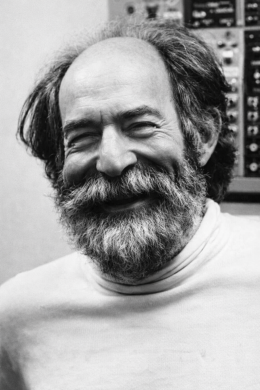
Emmanuel Ghent

- Masochism, Submission, Surrender: Masochism as a Perversion of Surrender (1990)
- Credo: The Dialectics of One-Person and Two-Person Psychologies (1989)
- Paradox and Process (1992)
- Interaction in the Psychoanalytic Situation (1995)
- Wish, Need, Drive: Motive in the Light of Dynamic Systems Theory and Edelman's Selectionist Theory (2002)
- Integration of dynamic systems theory with relational psychoanalysis
- Development of psychoanalytic journal database systems (JLIST)
Emmanuel Robert Ghent (May 15, 1925 – March 31, 2003) was an American psychoanalyst, theorist, and electronic music composer who played a foundational role in the emergence of relational psychoanalysis in the late twentieth century. Born in Montréal and trained in both medicine and psychoanalysis at McGill University and the W.A. White Institute, Ghent developed a distinctive theoretical and clinical approach centered on the concept of **surrender**—a reorientation of psychoanalytic technique away from analyst-centered interpretation toward mutual recognition and the patient's active relinquishment of defensive structures. Simultaneously, Ghent pioneered the use of computer-controlled electronic music synthesis and real-time audiovisual composition, inventing novel technologies for coordinating complex temporal and spatial relationships in performance. His dual career—spanning psychoanalytic theory, clinical practice, institutional leadership, and artistic innovation—exemplifies an expansive vision of psychoanalysis as a discipline capable of engaging with philosophy, systems theory, and the arts.
Biography
Early Life and Education
Emmanuel Ghent was born in Montréal, Quebec, on May 15, 1925.[1] His early intellectual formation was marked by a dual passion for music and science. At age fourteen, he began playing timpani in his school orchestra and composing works for small chamber ensembles.[2] While pursuing a major in biochemistry at McGill University, he simultaneously studied composition at the McGill Conservatory of Music, a bifurcation that would define his intellectual trajectory. He received his bachelor of science degree and subsequently attended the McGill University Faculty of Medicine, graduating with highest honors as an M.D. in 1950.[3]
Psychoanalytic Training and Early Career
In 1951, Ghent relocated to New York City to pursue postgraduate training in psychiatry and psychoanalysis. He studied at the W.A. White Institute, a center of innovation in American psychoanalysis, and received his diploma in psychoanalysis in 1956.[4] In 1961, he was hired as a faculty member at New York University, and he became an American citizen in 1962.[5] Throughout the 1950s and 1960s, Ghent maintained a modest clinical practice while developing his theoretical contributions to psychoanalysis. His early publications, including "Psyche and Eye" (1950) and collaborative work on countertransference and peer-group supervision (1962), established him as a thoughtful clinician engaged with the relational dimensions of analytic work.[6]
Institutional Leadership and the Relational Turn
By the 1980s, Ghent had become a central figure in the institutional development of relational psychoanalysis in North America. In 1988, he was instrumental in founding New York University's Relational Orientation program in psychoanalytic theory, a significant institutional achievement that formalized the teaching of relational approaches within a major academic institution.[7] He served as a Supervising Analyst at the W.A. White Institute and was an associate editor of Psychoanalytic Dialogues: A Journal of Relational Perspectives, a publication that became central to the dissemination of relational theory.[8] He was also a founding member of the International Association of Relational Psychoanalysis and Psychotherapy (IARPP), an organization dedicated to the international transmission and development of relational psychoanalytic theory and practice. Ghent's institutional work was characterized by a commitment to expanding psychoanalysis beyond the consulting room and the traditional analyst-centered model, engaging with philosophy, systems theory, and the arts.
Parallel Career in Electronic Music
Between 1946 and 1960, Ghent's compositional work was largely suspended due to the demands of medical and psychoanalytic training. However, after completing a wind quartet in 1960, composition re-entered his life with renewed intensity.[9] He undertook private studies in composition with Ralph Shapey, whose own innovations in rhythmic complexity and spatial separation of instruments profoundly influenced Ghent's aesthetic. Throughout the 1960s, Ghent composed chamber works that engaged multi-tempo rhythmic relationships and intervallic harmonic and melodic structuring, often involving spatial separation between players.[10] To solve the practical problem of maintaining ensemble coordination under such conditions, he invented the **"coordinome,"** a tape device that decoded one aggregate signal into individual tracks transmitted to performers via earphone, allowing each performer to maintain independent tempi and meters while remaining synchronized.[11]
In 1969, with the support of a Guggenheim Fellowship awarded in 1967, Ghent began a ten-year residency at the computer-controlled electronic music studio of Bell Telephone Laboratories.[12] There, he worked with the GROOVE Computer System, which enabled real-time control over both music and lighting effects, allowing him to compose integrated audiovisual works. His collaboration with filmmaker Lillian Schwartz on Phosphones (1971) was the first of five major collaborations between 1971 and 1974.[13] By 1974, Ghent began creating computer programs capable of making autonomous choices about pitch and rhythm, effectively positioning the computer as a "co-composer."[14] In the late 1970s, he revitalized his interest in intervallic relationships, constructing computer programs that realized complex intervallic groupings. The programs he developed were integral to the emergence of computer music as a field and continue to influence contemporary practice.[15]
Throughout his career, Ghent collaborated with a diverse array of artists, including composers Ben Johnston and Ornette Coleman, sculptor Peter Nicholson, choreographer Gladys Baylin, filmmakers Lillian Schwartz and Ken Knowlton, and instrumentalists such as trumpeter Ronald Anderson, violinist Paul Zukofsky, and violist John Graham.[16] These collaborations exemplified his vision of psychoanalysis and art as mutually enriching domains of human experience.
Engagement with Psychoanalysis
The Relational Psychoanalytic Movement
Ghent was a founding figure of the relational psychoanalytic movement, which emerged in American psychoanalysis during the 1980s and 1990s as a fundamental reorientation of theory and practice. Alongside contemporaries such as Stephen Mitchell, Adrienne Harris, Muriel Dimen, and Ruth Stein, Ghent contributed to a paradigm shift away from Freudian drive theory and one-person psychology toward an emphasis on intersubjectivity, mutual recognition, and the relational field.[17] The relational turn represented a critical engagement with classical psychoanalysis, drawing on object relations theory, attachment theory, phenomenology, and systems theory to reconceptualize the analytic encounter as a mutual, intersubjective process rather than a unidirectional application of technique by an omniscient analyst.
Critique of One-Person Psychology
Ghent's theoretical work was animated by a sustained critique of what he termed "one-person psychology"—the classical psychoanalytic model in which the analyst occupies a position of detached objectivity and the patient's psychic life is understood as an autonomous system governed by internal drives and fantasies. In his 1989 paper "Credo: The Dialectics of One-Person and Two-Person Psychologies," Ghent articulated the philosophical and clinical implications of moving beyond this framework.[18] He argued that psychoanalytic theory and practice must account for the irreducible presence of the analyst as a subject, not merely as a blank screen or container. This move opened psychoanalysis to questions of intersubjectivity, mutual recognition, and the ethical dimensions of the analytic relationship—concerns that had been marginalized or foreclosed within classical theory.
Integration with Systems Theory and Philosophy
Ghent's later work increasingly engaged with systems theory, particularly the work of Gerald Edelman on neural selectionism and dynamic systems. In his 2002 paper "Wish, Need, Drive: Motive in the Light of Dynamic Systems Theory and Edelman's Selectionist Theory," Ghent attempted to reconceptualize fundamental psychoanalytic categories—wish, need, and drive—through the lens of contemporary neuroscience and complexity theory.[19] This work exemplified his commitment to keeping psychoanalysis in dialogue with adjacent disciplines and to avoiding theoretical ossification. By grounding psychoanalytic concepts in systems-theoretic and neuroscientific frameworks, Ghent sought to preserve the clinical and philosophical insights of psychoanalysis while subjecting them to rigorous contemporary scrutiny.
Theoretical Contributions
Surrender versus Submission
Ghent's most influential theoretical contribution is his distinction between **surrender** and **submission**, articulated most fully in his 1990 paper "Masochism, Submission, Surrender: Masochism as a Perversion of Surrender."[20] This work represents a fundamental reorientation of psychoanalytic understanding of masochism, passivity, and the patient's role in analytic transformation.
In classical psychoanalytic theory, masochism is understood as a perversion of the death drive, a pathological eroticization of suffering and subjection. Ghent's innovation was to distinguish between two superficially similar but fundamentally different psychological states: **submission** and **surrender**. Submission, in Ghent's formulation, is a defensive capitulation to external force or internal threat; it involves the ego's surrender of agency to an internalized aggressor or to the demands of an external authority. Submission is characterized by resentment, compliance without genuine participation, and the preservation of a defended self that maintains its integrity through passive resistance or hidden rebellion.
- Surrender**, by contrast, is an active relinquishment of defensive structures—a voluntary opening of the self to new experience, to the other, and to transformation. Surrender is not passive but involves a profound activity: the patient actively surrenders their habitual defenses, their narcissistic investments, and their rigid characterological positions. In the analytic situation, surrender involves the patient's willingness to be genuinely affected by the analyst's presence and interpretations, to allow the analytic process to alter their internal world, and to participate in the mutual creation of meaning. Surrender is thus the opposite of masochism; it is the condition for genuine analytic change and for what Ghent termed "authentic relatedness."[21]
This distinction has profound clinical implications. Rather than interpreting the patient's passivity or compliance as defensive submission, the analyst can recognize moments of genuine surrender—moments in which the patient's defenses soften, in which they become genuinely open to the analyst's perspective, and in which new possibilities for being emerge. The analyst's task is not to impose interpretations but to create conditions in which surrender becomes possible, conditions characterized by safety, authenticity, and mutual recognition.
Intersubjectivity and the Relational Field
Ghent's work on surrender is inseparable from his broader theoretical commitment to intersubjectivity and the concept of the **relational field**. Rather than understanding the analytic situation as composed of two separate subjects—analyst and patient—each with their own internal worlds, Ghent emphasized the emergence of a shared relational field in which both participants are mutually constituted and transformed. The analytic relationship is not a container in which the patient's unconscious is revealed; rather, it is a dynamic, intersubjective space in which meaning is created through the mutual engagement of analyst and patient.
This emphasis on the relational field represents a departure from object relations theory, which, despite its attention to relationships, often retains a fundamentally intrapsychic focus. For Ghent, the relational field is not reducible to the patient's internal object relations or to the analyst's countertransference; rather, it is an emergent property of the analytic dyad, irreducible to either participant alone. This theoretical move has significant implications for understanding transference and countertransference, which are reconceived not as distortions or projections but as authentic expressions of the relational field.
Two-Person Psychology and Mutual Recognition
Ghent's articulation of "two-person psychology" represents an attempt to theorize the analytic relationship as fundamentally asymmetrical yet mutually constitutive. The analyst is not a blank screen but a subject with their own subjectivity, history, and vulnerability. The patient is not a passive recipient of interpretation but an active participant in the creation of meaning. This framework draws on philosophical traditions of intersubjectivity and mutual recognition, particularly the work of Hegel and contemporary philosophers of recognition such as Axel Honneth.
In Ghent's formulation, genuine analytic change occurs not through the analyst's superior knowledge or interpretive prowess but through moments of mutual recognition in which both analyst and patient are genuinely present to one another. These moments are characterized by authenticity, vulnerability, and the willingness of both participants to be affected by the other. The analyst's interpretations are most effective not when they are technically perfect but when they emerge from a place of genuine engagement with the patient's subjectivity and when they invite the patient into a collaborative exploration of meaning.
Psychoanalytic Technique and Clinical Innovation
Ghent's theoretical innovations have direct implications for psychoanalytic technique. Rather than emphasizing the analyst's neutrality, abstinence, and interpretive authority, Ghent's approach privileges authenticity, presence, and mutual engagement. The analyst's task is not to remain detached but to be genuinely available to the patient, to acknowledge the ways in which the patient affects them, and to use this affective engagement as a source of clinical understanding. This does not mean that the analyst abandons professional boundaries or engages in self-disclosure; rather, it means that the analyst's subjectivity is recognized as an inevitable and potentially therapeutic dimension of the analytic process.
Ghent's work on surrender also has implications for understanding resistance and defensive processes. Rather than interpreting resistance as an obstacle to be overcome through superior interpretive technique, the analyst can recognize resistance as a form of self-protection that has served important functions. The task is not to demolish defenses but to create conditions in which the patient can gradually relax their defensive vigilance and allow themselves to be genuinely affected by the analytic relationship. This process is gradual, nonlinear, and fundamentally collaborative.
Clinical and Institutional Work
Teaching and Transmission
Throughout his career, Ghent was deeply committed to the transmission of psychoanalytic knowledge and the training of new analysts. As a Clinical Professor of Psychology at New York University's Postdoctoral Program in Psychoanalysis, he taught courses on relational theory, clinical technique, and the history of psychoanalysis. His founding role in NYU's Relational Orientation program was instrumental in institutionalizing relational approaches within academic psychoanalytic training. As a Supervising Analyst at the W.A. White Institute, he worked with candidates in their clinical development, emphasizing the integration of theoretical sophistication with authentic clinical presence.
Editorial and Archival Work
Ghent's contributions to psychoanalytic institutions extended beyond direct teaching and supervision. He served as an associate editor of Psychoanalytic Dialogues: A Journal of Relational Perspectives, a publication that became central to the dissemination of relational theory and clinical work. He was instrumental in the creation of the **JLIST Computer Program and Database: A Psychoanalytic Journal Bibliographic and Information Retrieval System**, an early attempt to systematize and make accessible the vast literature of psychoanalytic journals.[22] This work reflected Ghent's commitment to making psychoanalytic knowledge more widely available and to leveraging technological innovation in service of the field's development.
IARPP and International Relational Psychoanalysis
As a founding member of the International Association of Relational Psychoanalysis and Psychotherapy (IARPP), Ghent contributed to the international institutionalization of relational psychoanalysis. IARPP, founded in 1994, became a major organization dedicated to the development and dissemination of relational approaches across national and linguistic boundaries. Ghent's involvement in IARPP reflected his vision of psychoanalysis as a living, evolving discipline capable of engaging with diverse theoretical traditions and cultural contexts.
Influence and Legacy
Impact on Relational Psychoanalysis
Ghent's theoretical and clinical contributions have been foundational to the development of relational psychoanalysis as a major school within contemporary psychoanalysis. His distinction between surrender and submission has become a touchstone for relational clinicians, influencing how analysts understand the patient's role in analytic change and the conditions necessary for genuine transformation. His emphasis on intersubjectivity and the relational field has shaped the way contemporary analysts conceptualize the analytic encounter, moving away from classical models of analyst neutrality and objectivity toward frameworks that emphasize mutual recognition and authentic engagement.
Ghent's work has influenced a generation of relational psychoanalysts, including Lewis Aron, who conducted a major interview with Ghent in 2000 and has written extensively on relational theory and technique.[23] His theoretical innovations have been taken up and extended by scholars and clinicians working within relational, intersubjective, and contemporary psychoanalytic frameworks.
Interdisciplinary Resonance
Beyond psychoanalysis proper, Ghent's work on surrender and recognition has resonated with philosophical and theoretical work on intersubjectivity, ethics, and mutual recognition. His integration of systems theory and neuroscience into psychoanalytic thinking anticipated contemporary efforts to ground psychoanalytic theory in neuroscientific research while preserving the complexity and irreducibility of subjective experience. His parallel career in electronic music and audiovisual art exemplified an expansive vision of psychoanalysis as capable of engaging with aesthetic and technological innovation.
Archival and Scholarly Legacy
By the end of 2003, the New York Public Library Music Research division planned to make all of Ghent's musical works, which he had transferred from analog to digital formats, available online.[24] In 2018, Routledge published The Collected Papers of Emmanuel Ghent: Heart Melts Forward, a comprehensive collection of his psychological and theoretical writings that has made his work more widely accessible to scholars and clinicians.[25] This archival work ensures that Ghent's contributions to psychoanalytic theory and practice remain available for future generations of analysts and theorists.
Key Works
- Masochism, Submission, Surrender: Masochism as a Perversion of Surrender (1990): Ghent's most influential paper, in which he distinguishes submission from surrender and argues that surrender—the active relinquishment of defensive structures—is the condition for genuine analytic change and authentic relatedness.[26]
- Credo: The Dialectics of One-Person and Two-Person Psychologies (1989): A foundational theoretical paper in which Ghent articulates the philosophical and clinical implications of moving beyond classical one-person psychology toward a relational, two-person framework that emphasizes intersubjectivity and mutual recognition.[27]
- Paradox and Process (1992): An exploration of paradox as a fundamental feature of psychoanalytic process, examining how contradictions and tensions within the analytic relationship can catalyze transformation and growth.[28]
- Interaction in the Psychoanalytic Situation (1995): A detailed examination of the interactive dimensions of the analytic encounter, emphasizing the ways in which analyst and patient mutually constitute and transform one another through their engagement.[29]
- Wish, Need, Drive: Motive in the Light of Dynamic Systems Theory and Edelman's Selectionist Theory (2002): Ghent's final major theoretical paper, in which he attempts to reconceptualize fundamental psychoanalytic categories through the lens of contemporary neuroscience and systems theory, demonstrating his commitment to keeping psychoanalysis in dialogue with adjacent disciplines.[30]
See also
- Relational psychoanalysis
- Intersubjectivity
- Surrender (psychoanalysis)
- Stephen Mitchell
- Mutual recognition
- Two-person psychology
- Electronic music
- W.A. White Institute
References
- ↑ "Emmanuel Ghent". Wikipedia.
- ↑ "Computer Music Composer, Psychoanalyst Emmanuel Ghent, 77". New Music USA.
- ↑ "Computer Music Composer, Psychoanalyst Emmanuel Ghent, 77". New Music USA.
- ↑ "Computer Music Composer, Psychoanalyst Emmanuel Ghent, 77". New Music USA.
- ↑ "Computer Music Composer, Psychoanalyst Emmanuel Ghent, 77". New Music USA.
- ↑ "Emmanuel Ghent". Wikipedia.
- ↑ "Computer Music Composer, Psychoanalyst Emmanuel Ghent, 77". New Music USA.
- ↑ "Computer Music Composer, Psychoanalyst Emmanuel Ghent, 77". New Music USA.
- ↑ "Computer Music Composer, Psychoanalyst Emmanuel Ghent, 77". New Music USA.
- ↑ "Computer Music Composer, Psychoanalyst Emmanuel Ghent, 77". New Music USA.
- ↑ "Computer Music Composer, Psychoanalyst Emmanuel Ghent, 77". New Music USA.
- ↑ "Computer Music Composer, Psychoanalyst Emmanuel Ghent, 77". New Music USA.
- ↑ "Computer Music Composer, Psychoanalyst Emmanuel Ghent, 77". New Music USA.
- ↑ "Computer Music Composer, Psychoanalyst Emmanuel Ghent, 77". New Music USA.
- ↑ "Computer Music Composer, Psychoanalyst Emmanuel Ghent, 77". New Music USA.
- ↑ "Computer Music Composer, Psychoanalyst Emmanuel Ghent, 77". New Music USA.
- ↑ "Emmanuel Ghent". Wikipedia.
- ↑ "Emmanuel Ghent". Wikipedia.
- ↑ "Emmanuel Ghent". Wikipedia.
- ↑ "Emmanuel Ghent". Wikipedia.
- ↑ "Emmanuel Ghent". Wikipedia.
- ↑ "Computer Music Composer, Psychoanalyst Emmanuel Ghent, 77". New Music USA.
- ↑ "Emmanuel Ghent". Wikipedia.
- ↑ "Computer Music Composer, Psychoanalyst Emmanuel Ghent, 77". New Music USA.
- ↑ "Emmanuel Ghent". Wikipedia.
- ↑ "Emmanuel Ghent". Wikipedia.
- ↑ "Emmanuel Ghent". Wikipedia.
- ↑ "Emmanuel Ghent". Wikipedia.
- ↑ "Emmanuel Ghent". Wikipedia.
- ↑ "Emmanuel Ghent". Wikipedia.