Fragmented body
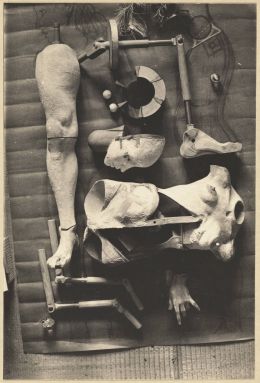
Originator
Influence
Conceptual precursor
Systematization
Foundational dependency
Foundational
Theoretical opposition
Clinical manifestation
Clinical manifestation
Elaborates
Theoretical evolution
The fragmented body (French: corps morcelé) is a foundational concept in Lacanian psychoanalysis designating the subject’s early experience of the body as discontinuous, uncoordinated, and lacking unified form. The concept names a mode of corporeal experience that precedes the formation of a coherent ego and is structurally opposed to the specular unity produced in the mirror stage. Rather than a biological immaturity alone, the fragmented body refers to a psychic experience of bodily disintegration that is constitutive of subjectivity and persists as a latent dimension throughout psychic life.
Lacan introduces the concept most explicitly in his early writings on the mirror stage and develops it across his seminars as a key term for understanding the Imaginary register, identification, and the structural instability of the ego. The fragmented body functions not as a developmental phase that is simply overcome, but as a structural background against which the ego’s apparent unity is formed and continually threatened.
Conceptual overview
In Lacanian theory, the fragmented body refers to the subject’s experience of the body prior to its capture by a unifying image. This experience is characterized by sensations of disjointed limbs, uncoordinated motor activity, and a lack of global bodily mastery. Lacan emphasizes that this fragmentation is not merely neurological or physiological, but psychic and imagistic in nature. It is bound to the subject’s relation to images, affects, and the absence of symbolic mediation.
The fragmented body is therefore inseparable from the Imaginary order, which governs relations of image, form, and identification. In Lacan’s account, the ego is not the outcome of organic maturation but the result of an identificatory process in which the subject misrecognizes itself in an external image of unity. The fragmented body designates what this image conceals: a prior and persisting disunity that remains operative beneath the ego’s coherence.
This structural opposition between fragmentation and unity underpins Lacan’s critique of ego psychology, which treats the ego as a center of synthesis and adaptation. Against this view, Lacan insists that ego unity is always precarious, dependent on identificatory supports, and vulnerable to regression, anxiety, and psychotic phenomena.
Early theoretical context
Pre-Lacanian references
While the term corps morcelé is Lacan’s own, the problematic of bodily disunity has antecedents in earlier psychoanalytic and philosophical traditions. Freud repeatedly emphasized the non-given nature of the ego, famously stating that “the ego is first and foremost a bodily ego,” but one that emerges through psychic processes rather than anatomical unity.[1] Freud’s account already implies a gap between bodily sensation and ego coherence, though it does not yet articulate this gap in imagistic or structural terms.
Lacan also draws on developments in neurology and developmental psychology of the early twentieth century, particularly studies of infant motor incapacity and delayed coordination. However, he explicitly distances his account from purely maturational explanations, insisting that the decisive factor is the subject’s encounter with an image, not the completion of organic development.
Lacan’s early formulations
The fragmented body appears most prominently in Lacan’s early work on the mirror stage, first presented at the 1936 International Psychoanalytical Association congress in Marienbad and later revised in subsequent texts. In these formulations, Lacan contrasts the infant’s lived experience of motor disarray with the anticipatory unity presented by the mirror image.[2]
Lacan describes the infant’s bodily experience prior to the mirror stage as marked by “turbulent movements,” partial sensations, and a lack of coordination. The mirror image offers a Gestalt of totality that the subject jubilantly assumes, precisely because it contrasts so sharply with the fragmented bodily experience that precedes it. The fragmented body thus functions as the negative ground against which the ego’s unity appears both desirable and convincing.
Importantly, Lacan insists that this unity is not internalized once and for all. The mirror image remains external, and the ego remains dependent on Imaginary identifications for its stability. The fragmented body therefore continues to haunt the subject, reappearing in moments of anxiety, psychosis, and bodily symptom formation.
Structural function of the fragmented body
From a structural perspective, the fragmented body names a fundamental vulnerability in the constitution of the subject. It is not confined to infancy but persists as a latent dimension of subjectivity that can resurface when Imaginary supports fail. Lacan later links this persistence to phenomena such as anxiety, psychosis, and the experience of bodily invasion or disintegration.
In this sense, the fragmented body is not simply overcome by the mirror stage but displaced. The ego’s unity is achieved at the cost of a repression or covering-over of fragmentation, which remains structurally operative. This dynamic helps explain why bodily symptoms, hallucinations, and experiences of corporeal disorganization play such a prominent role in Lacan’s accounts of psychosis and severe anxiety states.
The fragmented body thus occupies a crucial position at the intersection of the Imaginary and the Real. While it is articulated through images and affects, it also gestures toward what resists symbolization and formal unity, anticipating Lacan’s later elaborations of the Real as that which disrupts coherence and meaning.
Historical and Theoretical Origins
Freudian Background: Body, Drive, and Fragmentation
Although the expression corps morcelé is specific to the work of Jacques Lacan, the problematic of bodily fragmentation is already present in Freud’s metapsychology. Freud does not posit a unified body-image as a primary given; rather, the body first appears in psychoanalysis as a collection of erotogenic zones and partial sources of excitation, articulated through the theory of the drives (Triebe). In texts such as Three Essays on the Theory of Sexuality (1905), Freud emphasizes the fundamentally partial nature of infantile sexuality, which is organized around the mouth, anus, skin, and other localized zones rather than around a coherent bodily totality.[3]
This early emphasis on partial drives already implies a body experienced as discontinuous and non-integrated. Freud’s later elaborations of narcissism further complicate the issue. In On Narcissism: An Introduction (1914), Freud introduces the idea that the ego is not present from the outset but must be constituted through a libidinal investment in the body as an image or unity.[4] The ego, Freud famously writes, is “first and foremost a bodily ego,” an idea Lacan will later radicalize by dissociating the ego from any natural or biological coherence.
From this Freudian perspective, bodily unity is always secondary and precarious. The infant’s earliest bodily experience is one of motor incapacity, sensory discontinuity, and uncoordinated excitation—conditions that provide an essential backdrop for Lacan’s later formulation of the fragmented body as a structural condition rather than a merely developmental phase.
Early Lacanian Formulations and Psychiatric Context
Lacan’s earliest discussions of bodily fragmentation emerge in the 1930s, in close proximity to his psychiatric work on psychosis and paranoia. In his doctoral thesis, De la psychose paranoïaque dans ses rapports avec la personnalité (1932), Lacan already emphasizes disturbances in bodily unity and self-experience in psychotic phenomena.[5] While the terminology of the corps morcelé is not yet stabilized, the clinical concern with bodily disintegration, hypochondriacal phenomena, and delusional experiences of bodily invasion is clearly present.
The concept becomes more explicit in Lacan’s pre-war writings and conference presentations, particularly in connection with what will later be formalized as the mirror stage. In his 1936 presentation at the International Psychoanalytical Congress in Marienbad, Lacan contrasts the infant’s lived experience of motor fragmentation and helplessness with the anticipatory unity offered by the specular image.[6] The fragmented body designates the infant’s proprioceptive and affective experience prior to the stabilizing capture by an image of bodily totality.
Lacan will repeatedly insist that this fragmentation is not merely empirical or accidental. Rather, it reflects a structural discordance between the organism and its image, a discordance that the ego attempts—but never fully succeeds—to resolve. As later commentators note, the corps morcelé names the underside of ego formation itself, the negative imprint that persists beneath the ego’s imaginary coherence.[7]
Relation to the Mirror Stage and Imaginary Identification
Within Lacanian theory, the fragmented body is inseparable from the logic of the mirror stage. The mirror stage does not simply replace fragmentation with unity; rather, it institutes a tension between the subject’s lived bodily disarray and the idealized, unified image with which the subject identifies. The ego is formed through a process of identification with an external image that masks the subject’s underlying experience of incoherence.
Lacan emphasizes that the jubilant affect often associated with the mirror stage is inseparable from aggressivity and anxiety. The specular image offers mastery and form, but only by alienating the subject from its own bodily sensations. The fragmented body thus remains as a latent reference point, reappearing in moments of anxiety, regression, or psychotic decompensation.[2]
This dialectic between fragmentation and imaginary unity is central to Lacan’s critique of ego psychology. Against theories that treat the ego as a synthetic and adaptive function, Lacan insists that ego unity is always defensive and misrecognizing. The fragmented body names what the ego must continually repress or cover over in order to sustain the illusion of coherence.
In this sense, the corps morcelé is not a developmental residue that disappears after childhood, but a structural dimension of subjectivity that remains operative throughout psychic life.
The Fragmented Body and the Imaginary Register
Imaginary Disunity and Bodily Experience
In Lacanian theory, the fragmented body is situated squarely within the Imaginary register, the domain of images, forms, and identificatory relations. The Imaginary does not provide symbolic mediation or linguistic articulation; instead, it organizes experience through visual and affective coherence. Prior to the stabilizing effects of Imaginary identification, the subject’s bodily experience is characterized by disunity, lack of coordination, and the absence of a unifying form.
Lacan repeatedly emphasizes that this experience should not be understood as a conscious perception of fragmentation. Rather, it is a retroactively inferred structure, deduced from the transformative effects of the mirror stage and from clinical phenomena in which bodily coherence breaks down. The fragmented body names what precedes and underlies Imaginary unity, not a phenomenologically accessible stage of development.
This distinction is crucial. To treat the fragmented body as a literal perceptual experience risks reducing Lacan’s theory to developmental psychology. Instead, the fragmented body designates a structural condition: the body is not given as a totality but must be constructed through identification with an image that is fundamentally external to the subject.
Ego Formation and Misrecognition
The emergence of the ego is inseparable from the subject’s encounter with an image of bodily unity. In the mirror stage, the subject identifies with a specular image that presents a coherent, bounded form, in contrast to the subject’s lived experience of motor incapacity and affective turbulence. Lacan characterizes this identification as a misrecognition (méconnaissance), insofar as the subject takes the image to represent its own being.[2]
The ego is thus not the agent of synthesis but its product. It is constituted through an Imaginary identification that compensates for the fragmented body by offering a form of anticipatory mastery. However, because this unity is derived from an external image, it remains alienated and unstable. The ego’s coherence depends on the continued support of Imaginary identifications and is therefore vulnerable to disruption.
Lacan develops this argument extensively in Seminar II, where he criticizes ego psychology for treating the ego as an adaptive function oriented toward reality. Against this view, Lacan insists that the ego is fundamentally Imaginary and defensive, constructed to mask an underlying lack of bodily and subjective unity.[8]
The fragmented body thus persists beneath the ego as its negative condition of possibility. The ego’s apparent unity is always haunted by the threat of disintegration, a threat that becomes visible in moments of anxiety, regression, or psychotic breakdown.

Aggressivity and Rivalry
One of the most important consequences of this Imaginary structure is the emergence of aggressivity. Lacan famously links aggressivity to the mirror stage, arguing that the same identificatory process that produces ego unity also generates rivalry and hostility. The specular image is not merely an image of the self, but an image that introduces comparison, competition, and tension with the other.
In his paper “Aggressivity in Psychoanalysis” (1948), Lacan explicitly connects aggressivity to the fragmented body. He argues that aggressivity arises from the subject’s relation to an image of bodily unity that conceals a more fundamental experience of disunity and vulnerability.[9] The subject’s hostility toward the other reflects a struggle to secure Imaginary coherence against the ever-present threat of fragmentation.
Aggressivity is therefore not a secondary emotional reaction but a structural effect of Imaginary identification. The ego’s unity is achieved at the cost of tension and rivalry, and the fragmented body remains the latent source of this instability. The more rigidly the ego clings to its Imaginary form, the more violently it may react to perceived threats to that form.
This dynamic also explains why bodily imagery in dreams, fantasies, and symptoms so often takes violent or dismembering forms. Such imagery does not merely express aggression toward others but stages the subject’s own relation to bodily fragmentation, projected outward and reencountered in the Imaginary field.
Structural Persistence of Fragmentation
Although the mirror stage introduces a durable form of Imaginary unity, it does not abolish the fragmented body. Lacan insists that the fragmentation persists structurally and may re-emerge whenever Imaginary supports fail. This persistence becomes especially visible in clinical structures such as psychosis, where the stabilizing effects of Imaginary identification are insufficient to compensate for disturbances at the level of the Symbolic.
Even in neurosis, moments of anxiety often coincide with a destabilization of bodily unity. The subject may experience sensations of bodily invasion, dismemberment, or loss of boundaries, phenomena that point to the continued presence of the fragmented body beneath the ego’s surface coherence. In this sense, the fragmented body functions as a limit concept, marking the point at which Imaginary unity gives way to anxiety and disorganization.
Theoretical accounts that treat ego unity as stable or cumulative fail to account for this structural persistence. Lacan’s insistence on the fragmented body thus serves as a corrective to any conception of development that assumes a smooth progression from disunity to integration. The body remains, for Lacan, a site of fundamental discordance.
Clinical Dimensions of the Fragmented Body
The Fragmented Body in Neurosis
In neurotic structures, the fragmented body is typically not experienced directly, but remains latent beneath the ego’s Imaginary coherence. The ego, supported by specular identification and Symbolic mediation, generally succeeds in masking bodily disunity. Nevertheless, Lacan emphasizes that this masking is never complete. Moments of anxiety, regression, or symptom formation may reveal cracks in the Imaginary envelope, allowing aspects of bodily fragmentation to surface.
Neurotic symptoms frequently involve the body as a site of compromise formation. Somatic complaints, conversion symptoms, and hypochondriacal anxieties may be understood as indirect expressions of a destabilized body image. In such cases, the fragmented body does not appear as an explicit experience of dismemberment, but as localized disturbances—sensations without clear organic cause, bodily zones invested with excessive affect, or anxieties tied to bodily boundaries.
Lacan insists that these phenomena should not be reduced to psychosomatic explanations alone. Rather, they reflect the subject’s relation to the body as mediated by the Imaginary and Symbolic registers. The symptom functions as a symbolic binding that limits the emergence of fragmentation, channeling bodily disorganization into a structured, interpretable form.[10]
From this perspective, neurotic anxiety often arises when the Imaginary supports of the ego falter, exposing the subject to a fleeting encounter with bodily disunity. Anxiety thus signals not simply fear of an object, but a threat to the coherence of the body-image itself.
Psychosis and the Return of Fragmentation
The fragmented body assumes a far more explicit and dramatic role in psychosis. In psychotic structures, Lacan argues, the Imaginary stabilization of the ego is insufficiently supported by the Symbolic order, particularly due to the foreclosure of the Name-of-the-Father. As a result, the Imaginary unity of the body is fragile and prone to collapse.
In Seminar III, Lacan describes numerous clinical phenomena in which psychotic subjects experience their bodies as invaded, dismembered, or externally controlled.[11] Hallucinations involving bodily organs, sensations of bodily disintegration, and delusions of bodily transformation exemplify the direct return of fragmentation that the ego can no longer contain.
Unlike neurotic symptoms, which symbolically bind bodily disturbance, psychotic phenomena often bypass Symbolic mediation altogether. Fragmentation appears not as metaphor or displacement, but as lived bodily experience. The subject may report organs acting independently, limbs being removed or altered, or invasive forces penetrating the body from outside. These experiences underscore Lacan’s insistence that the fragmented body is not abolished by development, but merely displaced when structural supports are intact.
Lacan emphasizes that such experiences are not neurological in origin. While they may mimic organic pathology, their logic is symbolic and structural. The fragmented body returns in psychosis because the Imaginary ego lacks the Symbolic anchoring necessary to maintain bodily unity.
Anxiety and the Threat of Disintegration
Across clinical structures, Lacan accords a privileged role to anxiety as a signal of bodily destabilization. Unlike fear, which is oriented toward a specific object, anxiety arises when the subject confronts a disruption in the coordinates that sustain subjective and bodily coherence.
In Lacan’s account, anxiety often coincides with moments when the Imaginary envelope of the body becomes porous. The subject may experience sensations of suffocation, bodily dissolution, or loss of boundaries, even in the absence of external danger. Such experiences point to a proximity between anxiety and the fragmented body, insofar as both involve a breakdown of Imaginary form.
In Seminar X, Lacan explicitly links anxiety to disturbances in the relation between the subject and the body, particularly in relation to the object a and the loss of Imaginary consistency.[12] Anxiety signals the failure of the ego’s defenses and the emergence of something that cannot be fully symbolized or imaged.
From this perspective, anxiety may be understood as the affect that accompanies the imminent return of bodily fragmentation. It marks the point at which Imaginary unity falters but before full psychotic disorganization occurs. This position helps explain why anxiety is often accompanied by intense bodily sensations and why it occupies such a central place in Lacanian clinical theory.
Acting Out, Passage to the Act, and Bodily Crisis
The fragmented body also plays a role in Lacan’s distinction between acting out and passage to the act. In moments of extreme subjective tension, when Symbolic articulation fails and Imaginary unity collapses, the subject may attempt to resolve bodily disorganization through action.
In acting out, the body becomes a medium for a message addressed to the Other. The act is staged, often spectacularly, within the Imaginary field, preserving some relation to Symbolic interpretation. By contrast, in the passage to the act, the subject abandons the symbolic scene altogether, seeking relief from bodily and subjective tension through radical separation or expulsion from the social field.
Lacan associates such moments with a collapse of the coordinates that sustain the ego and the body-image. The passage to the act represents an attempt to escape the unbearable proximity of fragmentation by exiting the symbolic space entirely.[13]
These distinctions further underscore the clinical importance of the fragmented body as a structural concept. It provides a framework for understanding crises in which bodily unity can no longer be maintained through Imaginary or Symbolic means.
Later Developments and Theoretical Reinterpretations
From Imaginary Fragmentation to the Real of the Body
In Lacan’s later teaching, explicit references to the corps morcelé become less frequent. This relative disappearance, however, does not indicate that the concept is abandoned. Rather, the problematic of bodily fragmentation is displaced and rearticulated within Lacan’s growing emphasis on the Real of the body and on jouissance.
Beginning in the 1960s, Lacan increasingly distances himself from explanations centered on Imaginary form alone. While the mirror stage and Imaginary identification remain structurally essential, Lacan comes to stress that bodily disturbance cannot be fully explained at the level of image and identification. The body is not only fragmented at the level of representation, but also affected by a Real dimension that resists unification and symbolization.
In Seminar XI, Lacan emphasizes that the Real is what “always comes back to the same place,” disrupting symbolic articulation and Imaginary coherence.[14] Although the term corps morcelé is not foregrounded here, the clinical phenomena it names—bodily invasion, disorganization, and unassimilable sensation—are increasingly conceptualized as effects of the Real rather than solely as failures of Imaginary unity.
This shift allows Lacan to rethink bodily fragmentation beyond the developmental and imagistic framework of the mirror stage, situating it instead within the structural impossibility of fully integrating the body into symbolic order.
Jouissance and the Body
Lacan’s later work on jouissance further transforms the understanding of bodily fragmentation. Jouissance refers to a mode of enjoyment that exceeds pleasure and resists regulation by the Symbolic. It is experienced in and through the body, often in disruptive or painful forms.
From this perspective, the body is not merely fragmented because it lacks form, but because it is traversed by jouissance in ways that defy Imaginary containment. Symptoms, bodily repetitions, and invasive sensations are no longer understood only as failures of ego unity, but as points where the body is seized by a Real enjoyment that cannot be represented as a coherent image.
Later Lacanian commentators note that this reconceptualization does not negate the fragmented body, but radicalizes it. Fragmentation is no longer only the negative pole of Imaginary identification, but a consequence of the subject’s relation to jouissance and to the Real of the body itself.[15]
Conceptual Relations
The fragmented body occupies a nodal position within Lacanian theory and maintains systematic relations with several core concepts:
- Mirror stage — the fragmented body functions as the negative ground against which specular unity is constituted.
- Imaginary register — fragmentation belongs primarily to the Imaginary as its unstable underside.
- Ego — ego unity is a defensive response to bodily disunity.
- Aggressivity — rivalry and violence emerge from the tension between fragmentation and Imaginary mastery.
- Psychosis — fragmentation returns directly when Symbolic anchoring fails.
- Anxiety — signals moments when Imaginary coherence gives way.
These relations underscore that the fragmented body is not an isolated notion, but a structural pivot connecting Lacan’s theories of subject formation, clinical structures, and affect.
Debates, Misunderstandings, and Clarifications
The concept of the fragmented body has been subject to several persistent misunderstandings. One common error is to treat it as a literal developmental stage that infants consciously experience prior to acquiring bodily coordination. Lacan explicitly rejects this reading, insisting that fragmentation is a structural inference rather than a phenomenological description.
Another misunderstanding equates the fragmented body with neurological disorder or motor incapacity. While Lacan draws on observations of infant motor development, the corps morcelé is not reducible to biological immaturity. It names a psychic structure related to image, identification, and the limits of symbolization.
A further misreading treats the fragmented body as something definitively overcome by ego development. Lacan’s clinical work consistently demonstrates the opposite: fragmentation persists as a latent dimension that may re-emerge in anxiety, psychosis, or bodily symptom formation. The ego does not eliminate fragmentation but covers it over through Imaginary coherence.
Clarifying these points is essential to preserving the concept’s theoretical precision and avoiding its reduction to developmental psychology or metaphor.
Conceptual Legacy and Contemporary Relevance
The fragmented body remains a crucial reference point in Lacanian clinical theory and training. It provides a framework for understanding bodily phenomena that resist symbolic articulation, particularly in psychosis, severe anxiety, and psychosomatic presentations.
Beyond clinical psychoanalysis, the concept has influenced discussions in philosophy, cultural theory, and critical studies of embodiment, though Lacanian authors consistently caution against abstracting it from its clinical foundations. The enduring relevance of the fragmented body lies in its capacity to articulate the fundamental discord between the subject, the body, and unity—a discord that no developmental achievement or identificatory structure fully resolves.
See also
- Mirror stage
- Imaginary (psychoanalysis)
- Ego
- Aggressivity
- Psychosis
- Anxiety
- Jouissance
- Body (psychoanalysis)
References
- ↑ Freud, Sigmund. The Ego and the Id (1923), in The Standard Edition of the Complete Psychological Works of Sigmund Freud, vol. 19. London: Hogarth Press, pp. 25–26.
- ↑ 2.0 2.1 2.2 Lacan, Jacques. “The Mirror Stage as Formative of the I Function,” in Écrits: A Selection, trans. Alan Sheridan. London: Tavistock, 1977, pp. 1–7. Cite error: Invalid
<ref>tag; name "Lacan1949" defined multiple times with different content - ↑ Freud, Sigmund. Three Essays on the Theory of Sexuality. Standard Edition, Vol. VII. London: Hogarth Press, 1953, pp. 123–246.
- ↑ Freud, Sigmund. “On Narcissism: An Introduction.” Standard Edition, Vol. XIV. London: Hogarth Press, 1957, pp. 67–102.
- ↑ Lacan, Jacques. De la psychose paranoïaque dans ses rapports avec la personnalité. Paris: Seuil, 1975 [1932].
- ↑ Lacan, Jacques. “The Mirror Stage.” In Écrits: A Selection, trans. Alan Sheridan. New York: Norton, 1977, pp. 1–7.
- ↑ Evans, Dylan. An Introductory Dictionary of Lacanian Psychoanalysis. London: Routledge, 1996, pp. 38–39.
- ↑ Lacan, Jacques. The Seminar, Book II: The Ego in Freud’s Theory and in the Technique of Psychoanalysis (1954–1955), trans. Sylvana Tomaselli. New York: Norton, 1988, pp. 14–25.
- ↑ Lacan, Jacques. “Aggressivity in Psychoanalysis.” In Écrits: A Selection, trans. Alan Sheridan. New York: Norton, 1977, pp. 8–29.
- ↑ Lacan, Jacques. “The Direction of the Treatment and the Principles of Its Power.” In Écrits: A Selection, trans. Alan Sheridan. New York: Norton, 1977, pp. 226–280.
- ↑ Lacan, Jacques. The Seminar, Book III: The Psychoses (1955–1956), trans. Russell Grigg. London: Routledge, 1993, pp. 8–15.
- ↑ Lacan, Jacques. The Seminar, Book X: Anxiety (1962–1963). Unpublished English translation; references based on French edition. Paris: Seuil, 2004.
- ↑ Lacan, Jacques. The Seminar, Book XV: The Psychoanalytic Act (1967–1968). Unpublished; references based on seminar notes.
- ↑ Lacan, Jacques. The Seminar, Book XI: The Four Fundamental Concepts of Psychoanalysis (1964), trans. Alan Sheridan. London: Hogarth Press, 1977, pp. 49–52.
- ↑ Fink, Bruce. The Lacanian Subject: Between Language and Jouissance. Princeton: Princeton University Press, 1995, pp. 89–94.
The notion of the fragmented body (French: corps morcelé) is one of the earliest original concepts to appear in Lacan's work, and is closely linked to the concept of the mirror stage.
Mirror Stage
In the mirror stage the infant sees its reflection in the mirror as a whole/synthesis, and this perception causes, by contrast, the perception of its own body (which lacks motor coordination at this stage) as divided and fragmented.
Ego Formation
The anxiety provoked by this feeling of fragmentation fuels the identification with the specular image by which the ego is formed.
Fragmentation
However, the anticipation of a synthetic ego is henceforth constantly threatened by the memory of this sense of fragmentation, which manifests itself in "images of castration, emasculation, mutilation, dismemberment, dislocation, evisceration, devouring, bursting open of the body" which haunt the human imagination.[1]
Transference
These images typically appear in the analysand's dreams and associations at a particular phase in the treatment - namely, the moment when the analysand's aggressivity emerges in the negative transference.
This moment is an important early sign that the treatment is progressing in the right direction, i.e. towards the disintegration of the rigid unity of the ego.[2]
Illusion of Synthesis
In a more general sense, the fragmented body refers not only to images of the physical body but also to any sense of fragmentation and disunity:
"He [the subject] is originally an inchoate collection of desires - there you have the true sense of the expression fragmented body."[3]
Any such sense of disunity threatens the illusion of synthesis which constitutes the ego.
Hysteria
Lacan also uses the term fragmented body to explain certain typical symptoms of hysteria.
When a hysterical paralysis affects a limb, it does not respect the physiological structure of the nervous system, but instead reflects the way the body is divided up by an "imaginary anatomy".
In this way, the fragmented body is "revealed at the organic level, in the lines of fragilization that define the anatomy of phantasy, as exhibited in the schizoid and spasmodic symptoms of hysteria."[4]
See Also
References
- ↑ Lacan, Jacques. Écrits: A Selection. Trans. Alan Sheridan. London: Tavistock Publications, 1977. p. 11
- ↑ Lacan, Jacques. "Some Reflections on the Ego", Int. J. Psycho-Anal., vol. 34, 1953 [1951b]: 13
- ↑ Lacan, Jacques. The Seminar. Book III. The Psychoses, 1955-56. Trans. Russell Grigg. London: Routledge, 1993. p.39
- ↑ Lacan, Jacques. Écrits: A Selection. Trans. Alan Sheridan. London: Tavistock Publications, 1977. p. 5