Jorge Alemán

- Antiphilosophy
- Capitalist discourse
- Lacanian left
- Solitude: common
- Non-deconstructible real
- Lacan: Heidegger (1998)
- For a Lacanian Left (2009)
- Capitalism: Perfect Crime or Emancipation (2019)
- Ideology: Us in the Era, The Era in Us (2021)
- Political Breviary of Psychoanalysis (2023)
- Application of psychoanalysis to contemporary political affects (fear, solitude)
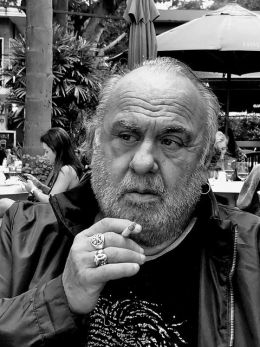
Jorge Alemán (born March 30, 1951, Buenos Aires) is an Argentine-Spanish Lacanian psychoanalyst, poet, and political theorist. He is widely recognized for his work in articulating a Lacanian Left—a theoretical project that seeks to ground emancipatory politics in the irreducibility of the unconscious, the structural lack in the subject, and the non-deconstructible nature of the drive.
Residing in Madrid since 1976, Alemán has played a pivotal role in the institutionalization of the Lacanian orientation in Spain through the World Association of Psychoanalysis (WAP). His work acts as an intersectional site where Lacanian psychoanalysis, Heideggerian ontology, and Marxist critique converge to analyze the subjective mutations produced by contemporary Capitalist Discourse.
Intellectual Orientation and Epistemic Framework
Alemán’s work is characterized by its resistance to the "academicization" of psychoanalysis. He maintains that psychoanalysis is not a worldview (Weltanschauung) nor a branch of the social sciences, but a practice that reveals the structural limit of all totalizing discourses.
Antiphilosophy: The Boundary of Thinking
Central to Alemán’s project is the concept of antiphilosophy, a term derived from Lacan’s later seminars. For Alemán, antiphilosophy is not a rejection of philosophy, but a rigorous practice of invoking philosophical categories—such as "Being," "Subject," or "Truth"—only to demonstrate where they fail when confronted with the Real.
In Antiphilosophical Questions in Jacques Lacan (1992) and Antiphilosophical Notes (2003), Alemán argues that while philosophy seeks to provide a ground or a "reason" (logos) for existence, psychoanalysis starts from the "abyss" of the unconscious. Antiphilosophy, therefore, is the mode of thought that remains faithful to the Freudian discovery: that the subject is not a master of its own house (the ego), but an effect of the signifier that remains perpetually divided by the drive.
The Lacan–Heidegger Axis
Alemán's most significant philosophical intervention is his study of the relationship between Jacques Lacan and Martin Heidegger. In Lacan: Heidegger (1998), co-authored with Sergio Larriera, Alemán utilizes the colon in the title to represent a structural relationship of both proximity and irreducible distance.
He identifies a parallel between Heidegger’s "ontological difference" (the distinction between Being and beings) and Lacan’s "subjective division." However, Alemán insists that Lacan goes further than Heidegger by introducing the Object petit a and jouissance. While Heidegger remains within the "task of thinking" the end of metaphysics, Lacan enters the "task of the drive," showing that the "clearing" of Being is always already inhabited by a libidinal remainder that resists any philosophical gathering.
The Non-Deconstructible Real
In the context of the postmodern debate, Alemán positions psychoanalysis as a critique of both Enlightenment rationalism and certain strands of Deconstruction. While post-structuralist thought often dissolves the subject into a play of infinite differences or textualities, Alemán argues for the non-deconstructible Real.
He posits that the drive and the "sexual non-relationship" (il n'y a pas de rapport sexuel) are not mere social constructions or linguistic effects that can be deconstructed or "solved" through political reform. Instead, they constitute the "hard kernel" of human existence. This insistence allows Alemán to maintain a concept of the subject that is neither a sovereign individual nor a mere cipher of power, but a site of resistance against the totalizing logic of the market.
Institutional History and Clinical Context
The trajectory of Jorge Alemán is inseparable from the history of the Lacanian movement in the Spanish-speaking world, particularly the transition of "the Freudian Field" from Argentina to Europe during the 20th century.
From Buenos Aires to Madrid
Alemán’s formative years in Buenos Aires were marked by a dual commitment to poetry and the burgeoning Lacanian movement in Argentina. Following the military coup of 1976, he went into exile in Spain at the age of 25. His arrival in Madrid coincided with the "Transición," a period of intense cultural and political flux following the death of Franco.
In 1981, he founded Serie Psicoanalítica, the first Lacanian journal in Madrid, which served as a primary vehicle for the dissemination of Lacan’s teaching in a country where psychoanalysis had previously been marginalized.
Institutional Consolidation (WAP and ELP)
Alemán was instrumental in the creation of the Escuela Lacaniana de Psicoanálisis (ELP) in Spain, an organization affiliated with the World Association of Psychoanalysis (WAP), founded by Jacques-Alain Miller. Within this framework, his work has been dedicated to the "clinical of the Real," focusing on how the symptoms of the contemporary subject reflect the "discontent in civilization" under late capitalism.
He currently serves as an AME (Analyste Membre de l'École) of the ELP and the WAP, maintaining a continuous dialogue between clinical practice and the broader "polis."
The Cultural Attaché: Theory in the Public Sphere
From 2004 to 2015, Alemán served as the Cultural Attaché for the Argentine Embassy in Spain. This period was not merely a diplomatic tenure but an extension of his theoretical work. He utilized the position to host high-level intellectual exchanges between European and Latin American thinkers, including Ernesto Laclau, Chantal Mouffe, Gianni Vattimo, and Slavoj Žižek.
His role facilitated a unique "theoretical diplomacy," where Lacanian concepts were used to analyze the "Pink Tide" governments in Latin America and the rise of new social movements in Europe (such as the 15-M movement in Spain). This work culminated in his being named Commander of the Order of Isabella the Catholic by the Spanish government, recognizing his contribution to the transatlantic intellectual community.
The Lacanian Left
Alemán’s most distinctive contribution to contemporary thought is the development of the Lacanian Left (Izquierda lacaniana). This is not a political program or a party affiliation, but a "logic of emancipation" that draws on the structural insights of psychoanalysis to rethink the political. Developed through works such as For a Lacanian Left (2009) and Lacan, Politics in Question (2010), the project seeks to move beyond both the teleological certainties of traditional Marxism and the fluid identitarianism of postmodernism.
The Constitutive Lack as Political Ground
The core thesis of the Lacanian Left is that the social bond is built upon an original and irreducible lack. Against utopian ideologies that promise a "reconciled" or "transparent" society, Alemán argues that the "failure" of the social bond is its very condition of possibility.
Following the work of Ernesto Laclau—with whom Alemán maintained a prolonged intellectual dialogue—the Lacanian Left posits that there is no "Big Other" of history that guarantees the success of political projects. Emancipation, therefore, consists in the collective assumption of this lack. For Alemán, a truly democratic politics is one that institutionalizes the "impossible" and refuses the capitalist promise of total satisfaction.
Common Solitude (Soledad: común)
A central concept in this framework is Common Solitude (Soledad: común), the title of his 2012 book. Alemán differentiates between the "isolation" produced by neoliberalism (which atomizes individuals into competing consumers) and "solitude."
In Lacanian terms, solitude refers to the "singular" relationship each subject has with their own drive and their own symptom. Alemán argues that a political collective should not be a "mass" (in the Freudian sense of identification with a leader) but a "conjunction of solitudes." Solidarity, in this view, is not based on shared identity or essence, but on the shared fact that we are all "incurably" marked by the lack. This allows for a form of political solidarity that respects the radical singularity of the subject while resisting the homogenizing forces of the market.
Theory of the Subject and Capitalist Discourse
Alemán has significantly extended Lacan’s 1972 formulation of the Capitalist Discourse (the "fifth discourse"). While the other four discourses (Master, Hysteric, University, and Analyst) involve a "limit" or an "impossibility" that allows the social bond to function, the Capitalist Discourse is characterized by its circularity and its attempt to eliminate the Real.
Capitalism as the "Perfect Crime"
In Capitalism: Perfect Crime or Emancipation (2019), Alemán describes the contemporary neoliberal order as a "perfect crime" against the subject. Capitalism functions as a "machine of circularity" that attempts to suppress the castration of the subject. By promising that every "lack-to-be" can be filled by a consumer object petit a, capitalism erodes the symbolic capacity of the subject to represent their own desire.
For Alemán, the result is a subjective mutation: the emergence of a subject who is "dead in life," trapped in a cycle of consumption and frustration. This leads to a rise in clinical phenomena such as "untriggered" psychosis, generalized depression, and anxiety, which Alemán interprets as symptoms of a symbolic order that no longer functions as a limit to the drive.
Neoliberalism and the Affects of Power
Alemán's recent work, including Ideology: Us in the Era, The Era in Us (2021), analyzes how neoliberalism operates not just as an economic system, but as a "governance of souls." He focuses on how power exploits the subject's own super-ego to produce "entrepreneurs of the self."
He identifies Fear as the dominant political affect of the neoliberal era. Unlike the "anxiety" (Angst) that leads to the Real, the fear cultivated by neoliberalism is a mechanism of social control that keeps the subject in a state of permanent emergency. In Political Breviary of Psychoanalysis (2023), he argues that the task of the analyst and the political theorist is to transform this paralyzing fear back into a productive anxiety that can lead to an act of subjective and political rupture.
Poetic Practice and the Real
Unique among major Lacanian theorists, Alemán’s work is deeply rooted in his practice as a poet. He maintains that poetry and psychoanalysis share a common frontier: both deal with the "hole" in language.
Poetry as Antiphilosophical Language
Alemán began his career in the 1970s with award-winning poetry collections such as Sobre hospicios y expertos navegantes (1974). For Alemán, poetry is the "antiphilosophical" language par excellence because it does not attempt to explain the Real, but to "touch" it.
He draws a parallel between the poetic "letter" and the Lacanian Sinthome. Just as the sinthome is a way of "knitting" the Real, Symbolic, and Imaginary together when the Name-of-the-Father fails, poetry provides a "know-how" (savoir-faire) with the drive. In his recent collection Río incurable (2017), the "river" serves as a metaphor for the drive—something that cannot be stopped or fully captured by the banks of the signifier, but which can be navigated.
The Influence of Borges and the Argentine Tradition
Alemán frequently references Jorge Luis Borges, not as a literary figure to be analyzed, but as a precursor to Lacan. He argues that Borges’s obsession with labyrinths, mirrors, and the "aleph" anticipates the Lacanian topology of the subject. This Argentine literary heritage provides Alemán with a style of writing that is often aphoristic, dense, and resistant to the linear logic of the "University Discourse."
Influence and Reception
Jorge Alemán’s impact spans three distinct but overlapping fields: clinical psychoanalysis, political philosophy, and the cultural landscape of the Spanish-speaking "Transatlantic" axis. His work is increasingly cited as a foundational pillar for "Lacanian Studies" in the 21st century, particularly for its ability to bridge the gap between the clinical experience of the symptom and the collective experience of the social.
Impact on Contemporary Leftist Thought
In the political sphere, Alemán’s influence was felt acutely in the emergence of the "new Left" in both Spain and Latin America. His concepts were instrumental for the intellectual architects of Podemos in Spain and the theoretical defenders of "National-Popular" movements in Argentina (Kirchnerism). Unlike theorists who rely on sociological data, Alemán provided these movements with a "libidinal" vocabulary to understand why subjects often vote against their own interests or why neoliberalism remains resilient despite economic crises.
His work on the "Lacanian Left" has been the subject of extensive academic scrutiny, most notably in the edited volume Lacan in the Logics of Emancipation: On Texts by Jorge Alemán (2018), which includes contributions from Timothy Appleton, José Alberto Raymondi, and other international scholars.
Dialogue with Slavoj Žižek and Continental Philosophy
Alemán has maintained a long-standing intellectual rivalry and dialogue with Slavoj Žižek. While both utilize Lacan to critique capitalism, their points of departure differ significantly. Žižek’s approach is heavily filtered through a Hegelian return to the "Big Other," whereas Alemán remains anchored in the antiphilosophical Heideggerian tradition.
Alemán has often critiqued Žižek for what he perceives as a "University Discourse" that risks transforming the Real into a manageable academic concept. In contrast, Alemán insists on the "Southern" perspective—the idea that the periphery (Latin America) offers a unique vantage point to witness the "fractures" of the global capitalist discourse. He has also engaged in significant dialogues with Gianni Vattimo regarding "Weak Thought" (pensiero debole) and with Eugenio Trías on the "Philosophy of the Limit," always seeking to show how psychoanalysis complicates these philosophical positions.
Awards and Academic Recognition
Alemán’s career has been marked by prestigious distinctions that reflect his dual role as a man of letters and a theorist of the unconscious:
- National Poetry Prize (Fondo Nacional de las Artes, Argentina, 1974) for Sobre hospicios y expertos navegantes.
- Commander of the Order of Isabella the Catholic (Spanish Government), for his work in cultural and intellectual exchange.
- Honorary Doctorates: Conferred by the National University of Rosario (2018) and the National University of Córdoba (2025) for his contributions to the field of psychology and humanities.
- Honorary Professorships: University of Buenos Aires (UBA), National University of General San Martín (UNSAM), and the National University of Villa María.
Selected Bibliography
Primary Theoretical Works (Spanish)
- Lacan: el campo del goce (1985)
- Lacan: Heidegger (with S. Larriera) (1989/1998)
- Cuestiones antifilosóficas en Jacques Lacan (1992)
- Lacan en la razón posmoderna (2000)
- Notas antifilosóficas (2003)
- Para una izquierda lacaniana... (2009)
- Lacan, la política en cuestión (2010)
- Soledad: Común. Políticas en Lacan (2012)
- En la frontera. Sujeto y capitalismo (2014)
- Horizontes neoliberales en la subjetividad (2016)
- Capitalismo: Crimen perfecto o emancipación (2019)
- Ideología. Nosotros en la época, la época en nosotros (2021)
- Breviario político del psicoanálisis (2023)
Major Poetry Collections
- Invasiones y leyendas (1972)
- Sobre hospicios y expertos navegantes (1974)
- Iguanas (1975)
- No saber (2008)
- Río incurable (2017)
- La hora del rechazo (2023)
English Translations
- Lacan and Capitalist Discourse: Neoliberalism and Ideology (Routledge, 2023)
See Also
- Lacanian Left
- Capitalist Discourse
- Antiphilosophy
- World Association of Psychoanalysis
- Slavoj Žižek
- Ernesto Laclau
References
- Rep, Miguel. "Jorge Alemán: Romper con la primacía de lo original." Página/12, 2007.
- Larriera, Sergio. Prologue to Lacan en la razón posmoderna. Miguel Gómez Ediciones, 2000.
- Appleton, T., & Raymondi, J. A. (Eds.). Lacan in the Logics of Emancipation. Miguel Gómez Ediciones/Filigrama, 2018.
- "Lacan and Capitalist Discourse." Routledge & CRC Press, 2024.
External Links
- Punto de Emancipación – Official blog and interview series directed by Jorge Alemán.
- Página/12 Author Page – Weekly columns and political interventions.
- Escuela Lacaniana de Psicoanálisis (ELP) – Institutional profile within the Spanish Lacanian school.